
PFAS Exposure: What You Need to Know About Testing, Health Risks, and Natural Detox Support
- Bradley Bush, ND

- Jul 16, 2025
- 4 min read
Updated: Jul 23, 2025
Per- and polyfluoroalkyl substances (PFAS) are synthetic chemicals used since the 1950s in products that resist water, grease, and stains. While helpful in consumer goods like nonstick pans, fast food packaging, and stain-resistant carpeting, PFAS are also known as "forever chemicals" because they don’t break down in the environment or the human body.
Because PFAS can accumulate in tissues over time, they have been linked to a range of health concerns—including endocrine disruption, immune system impairment, reproductive issues, thyroid disease, elevated cholesterol, and cancer. In Minnesota, communities like Woodbury, Stillwater, and Cottage Grove have experienced PFAS contamination in drinking water due to decades of disposal from industrial sites like 3M’s Chemolite plant.
How Do You Know if PFAS are in Your Body?
If you live in an area impacted by the 3M plant or suspect exposure to PFAs through your job or lifestyle, you may want to consider measuring PFAS levels in your body. Testing for PFAS can help confirm exposure and be used to monitor levels over time. Both blood and urine tests are available.
Blood Testing for PFAS Exposure
Blood testing is the most widely used method for assessing PFAS exposure. It provides information about current and past exposures, especially for PFAS with longer half-lives like PFOA and PFOS.
What PFAS Blood Testing Tells You
According to the Minnesota Department of Health (MDH), testing your blood for PFAS can:
Show the amount of PFAS in your body at the time of the test from both past and recent exposure
Allow you to compare your levels with national averages (which have decreased over the past 25 years)
Identify a limited number of PFAS chemicals (since labs can only test for a few of the thousands that exist)
The Cons of PFAS Blood Tests
They cannot predict future illness or confirm the cause of a current health condition
They do not show when or how you were exposed
A blood draw is required, which is invasive and can be uncomfortable
Blood tests for PFAS are more expensive that urine tests for PFAS
Urine Testing for PFAS Exposure
Urine testing can be used, particularly for PFAS with shorter half-lives or those that are more readily excreted in urine. However, urine levels may not accurately reflect the total body burden of PFAS. Blood testing is generally preferred because it can provide a more comprehensive picture of PFAS exposure, especially for chemicals that accumulate in the body over time.
Benefits of Urine Tests for PFAS
Indicates more recent exposure, helping you to know if you have a more current issue
Collection is non-invasive and painless
Less expensive than blood tests
Allows for comparison to the lab’s reference ranges
Offers insight into your body’s elimination of PFAS
Problems with PFAS Testing in Urine
It doesn’t detect as many PFAS
Some PFAS are poorly excreted in the urine
May miss low or moderate exposure levels
Other factors such as hydration, kidney function, and recency of exposure may affect results
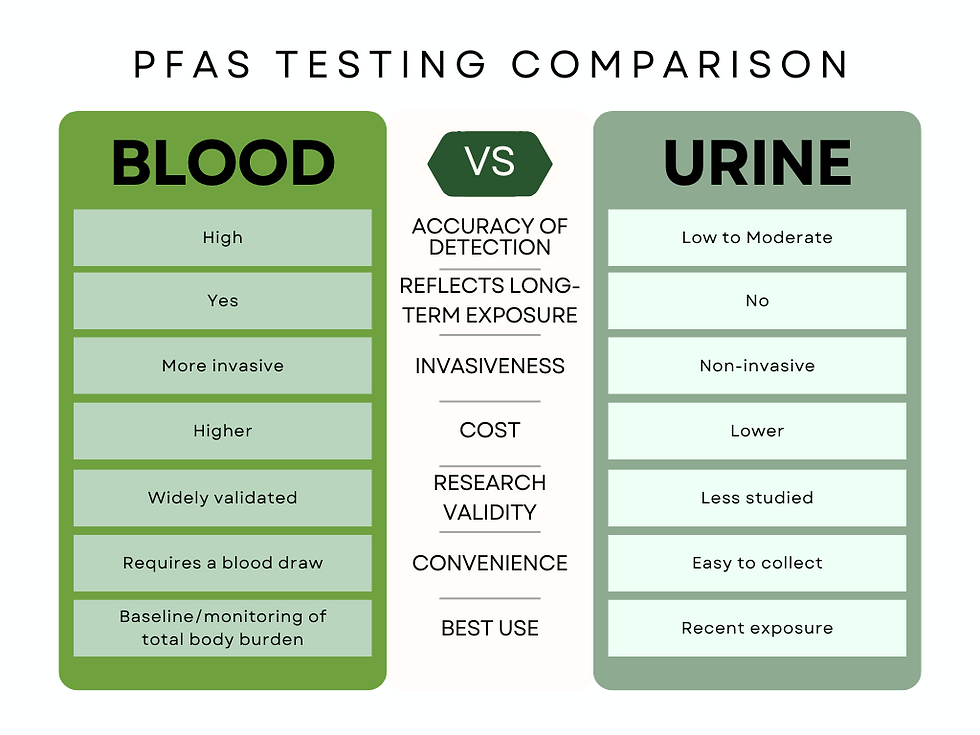
Neither test is perfect. However, knowing the levels of PFAS in your body, past or present, can help you determine if you need to take action to protect the health of you and your loved ones.
How to Reduce PFAS Exposure
While it’s nearly impossible to eliminate all PFAS exposure, you can reduce it significantly with a few lifestyle choices:
Avoid PFAS-containing products like microwave popcorn bags, fast food wrappers, nonstick cookware, stain-resistant carpets, and water-repellent fabrics
Use filtered water—especially for infant formula or in areas with known contamination
Choose low-PFAS fish, following MN’s fish consumption guidelines
Dust and vacuum regularly to minimize PFAS from indoor dust
Check cosmetic and personal care labels for PFAS-related ingredients
For more tips, see MDH’s guide to reducing PFAS exposure.
Supporting Your Body's Natural Detox Pathways
Even though PFAS are persistent, your body has powerful detox systems that you can support naturally through lifestyle and supplements.
Nutritional and Lifestyle Support for PFAS Detox
1. Support Liver Function
Nutrients like vitamin C, vitamin E, B vitamins, and milk thistle extract can help with phase I and phase II liver detoxification.
Cruciferous vegetables (broccoli, kale, brussel sprouts) are rich in sulfur compounds that up-regulate detox enzymes.
2. Enhance Glutathione Production
Glutathione is your body’s master antioxidant and key to binding and removing toxins. Precursor or direct support is available.
Support with N-acetylcysteine (NAC), alpha-lipoic acid, and glycine or liposomal glutathione supplements.
IV nutrition including glutathione pushes, Myer’s Cocktails and vitamin C can provide additional benefits.
3. Promote Antioxidant Resilience
PFAS may increase oxidative stress. Antioxidants like selenium, zinc, resveratrol, and CoQ10 help neutralize free radicals and protect tissues.
4. Maintain Healthy Bowel Movements
Fiber-rich foods support regularity and help prevent reabsorption of toxins.
Assess and address Small Intestinal Bacterial Overgrowth (SIBO).
Magnesium, probiotics, and adequate hydration are important tools for optimal bowel detox.
5. Sweat and Hydrate
Activities that promote sweating (saunas, exercise) may support toxin elimination via skin.
Drink filtered water to support kidney filtration and lymphatic flow.
Electrolyte replacement if you drink large quantities of water or sweat a lot.
Should You Get Tested for PFAS?
PFAS testing may be right for you if you:
Live in an area with known PFAS water contamination
Worked in industries with high PFAS exposure
Have chronic health conditions of unclear origin and want to rule out chemical burden
Want a baseline for tracking environmental exposures
Both blood and urine testing for PFAS are available at Natural Medicine of Stillwater.
PFAS testing through our clinic includes:
Blood or urine collection
Blood or urine test results with guidance
Follow-up and detoxification support (optional)
You do not need to be a patient at our clinic to have PFAS testing done through us. However, to receive follow-up care, you will need to set up a new patient appointment. Current patients can schedule a follow-up appointment. Call 651-342-1043 for pricing and to schedule a blood or urine collection.
Natural Medicine of Stillwater also offers professional-grade supplements that support natural detox pathways in store and online. You do not need to be a patient to purchase products. However, a visit with a healthcare provider can help determine what may work best for you.
